지금いま
検索データはまだありません。
Your mother's sister, and the word customers use for the woman serving them at a restaurant.
検索データはまだありません。
이모 (i·mo) is your mother's sister. The National Institute of Korean Language's learner's dictionary stops there, but its open dictionary 우리말샘 adds the second life of the word: a friendly way to address a middle-aged woman working in a restaurant. Say it across a 국밥집 and someone turns round.
It is one of a crowd of words for the same job. In the institute's 2018 survey, people most often used 저기요 (jeo·gi·yo) for a stranger, then 아저씨 or 아줌마, then 여기요 (yeo·gi·yo); staff liked 아저씨 and 아줌마 least and minded 여기요 and 저기요 least (Edaily, 9 July 2018). The linguist Robert Fouser, writing in the Hankyoreh in May 2024, dates the shift: 아줌마 was the word when he learned Korean in 1983, 여기요 took over in the 2000s, and 사장님 is what he hears most now, with 이모 kept for the place you go back to.
The institute's own answer, given to a questioner on 22 December 2025, is that no rule fixes a form of address, and that 여기요 and 저기요 are common and comfortable for both sides because they say nothing about the relationship.
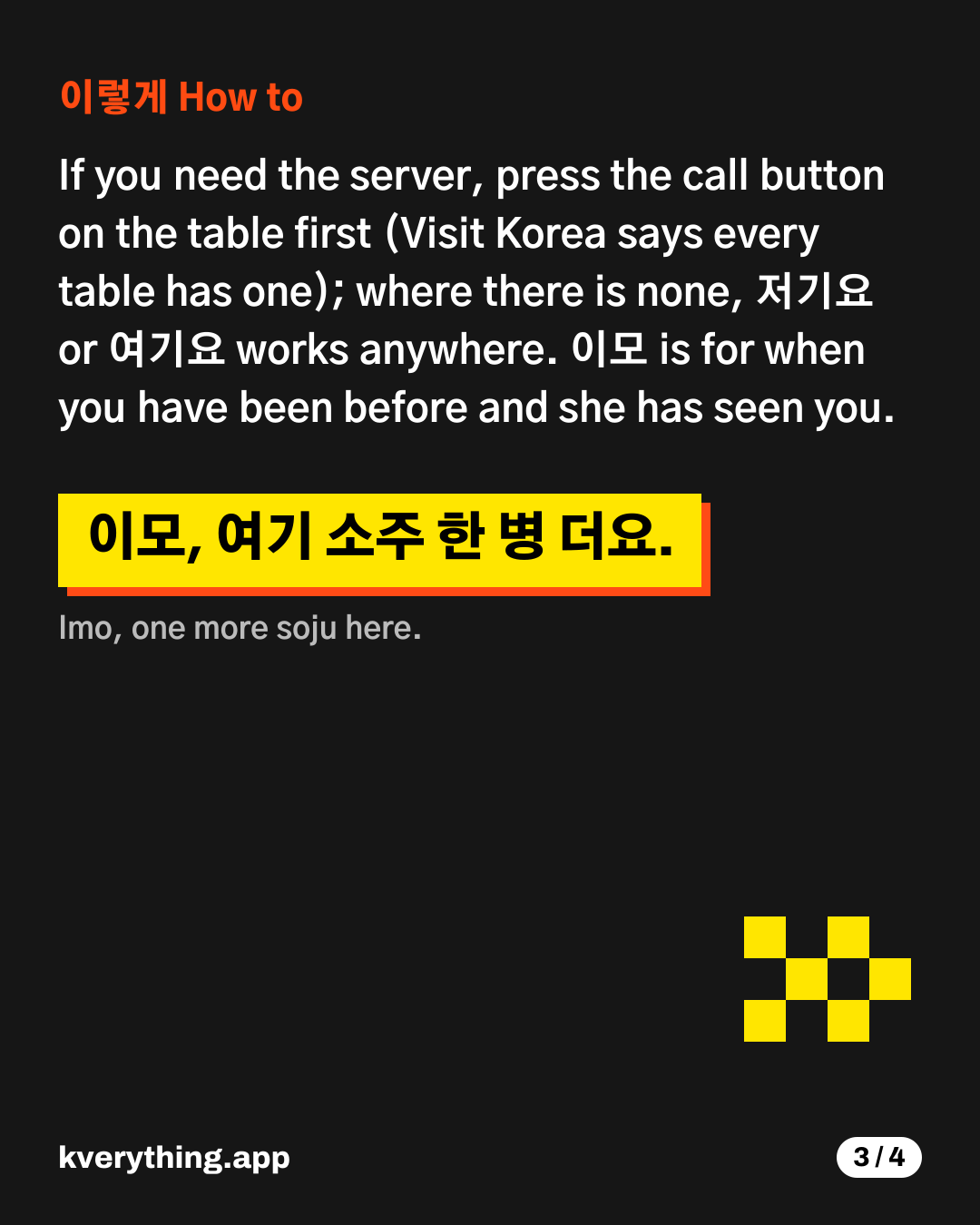
If you need the server, press the call button on the table first (Visit Korea says every table has one); where there is none, 저기요 or 여기요 works anywhere. 이모 is for when you have been before and she has seen you.
Imo, one more soju here.
Yes, coming.
最終確認 2026/11/04.
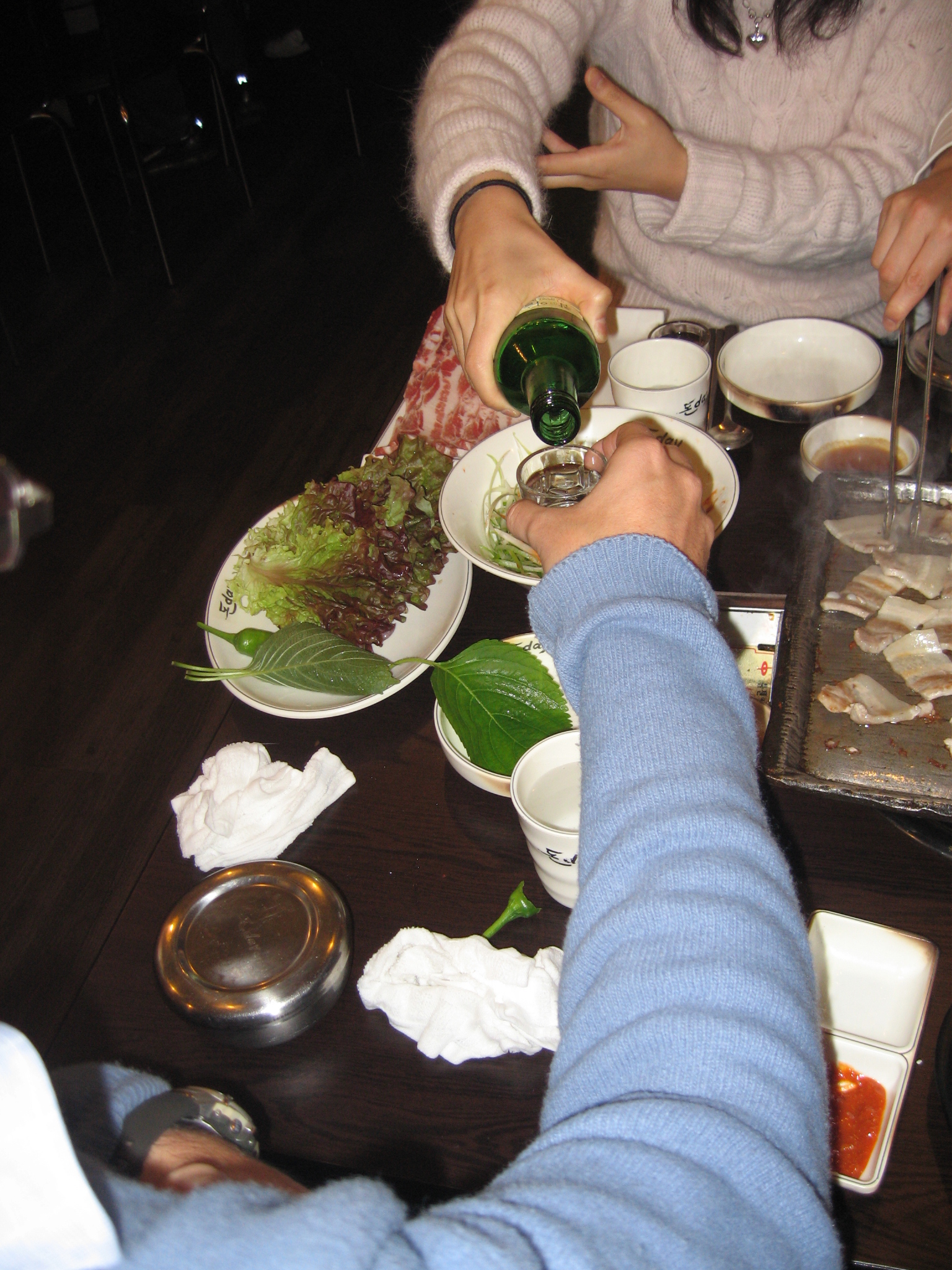 먹을것 食べもの · 맛소주SojuKorea's clear spirit, usually a diluted one, drunk in small glasses with grilled pork or a hot soup.오늘 올라옴 今日追加장소 場所 · 화면포장마차스테디 定番po·jang·ma·cha歩道に張ったテントに、プラスチックの椅子と焼酎、温かい一品があります。どのドラマにも、ここでの場面が一つはあります。
トーク
自分の言葉で書けば、みんなが自分の言葉で読めます。韓国語で答える読者には「現地人」バッジが付きます。
まだコメントはありません。最初のひとことを。